Syndication-Ready Images by luminis.media listing photography Houston
Syndication-ready is a specific promise. It means your photos, videos, and floor plans travel cleanly from the Houston Association of Realtors database into Zillow, Homes.com, Redfin, Realtor.com, brokerage sites, IDX feeds, and social ads without breaking, compressing into mush, or triggering compliance flags. For agents in Greater Houston, the stakes are real. A listing that hits the feeds with dull, distorted, or mislabeled visuals will sink in the first 48 hours, the window when search algorithms test engagement. Quality gets you clicks, but readiness gets you distribution. At Luminis Media, we build for both.
What “syndication-ready” really entails
Syndication readiness starts with the MLS. HAR pushes images outward through data feeds that apply additional compression, sometimes strip metadata, and sometimes reorder files. A set that looks perfect on your desktop can arrive on consumer sites with banding in skies, blotchy shadows, and mixed-up room labels. We calibrate upstream to survive that downstream journey.
For luminis.media listing photography, the technical target is not just beautiful. It is sRGB-safe, appropriately sharpened for web, and delivered in aspect ratios that will not get auto-cropped by common portals. More importantly, every file is labeled so the kitchen is the kitchen in every feed, not “IMG_9324.” This seems minor until a carousel opens with a pantry detail instead of the front elevation. Clickthrough drops. Time on page drops. The platform learns to bury the listing.
We test sets in live MLS previews and simulate portal compression before sending a gallery link. If an image risks moiré on patterned fabrics or tile, we catch it before the world does.
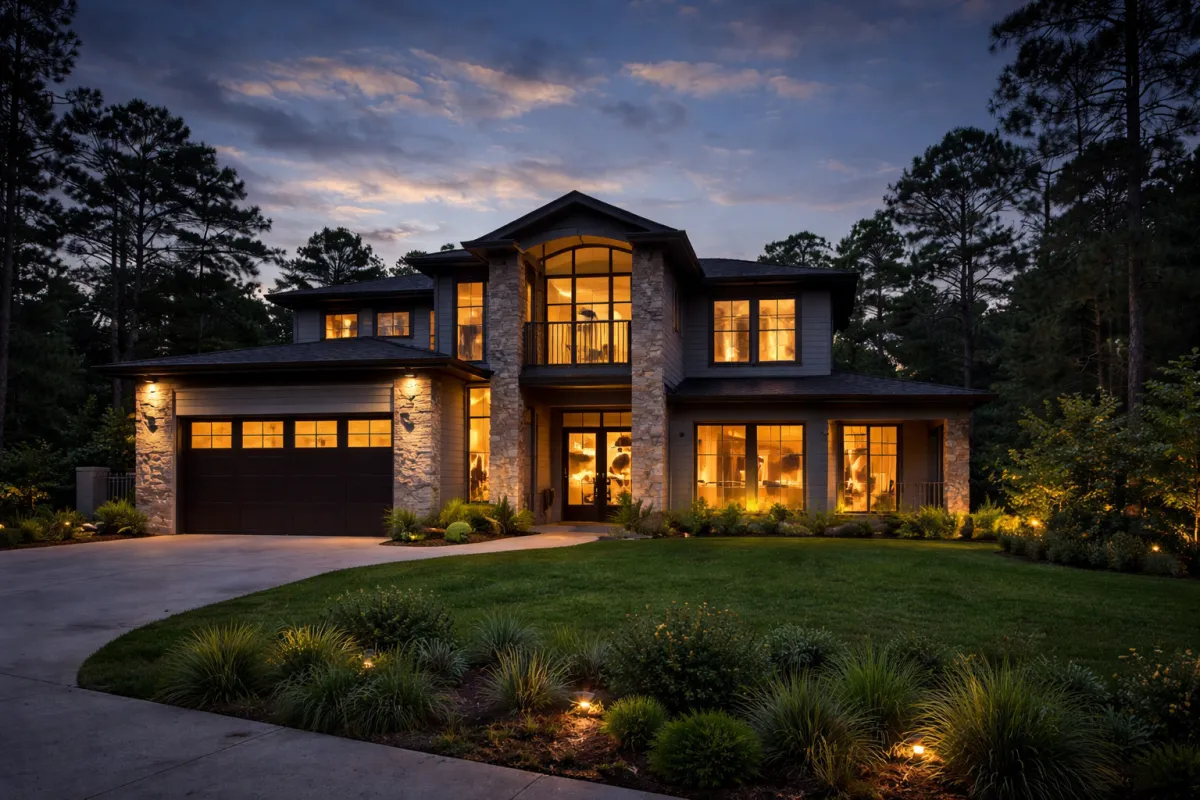
Houston’s MLS and portal ecosystem, in practice
Houston is a high-velocity digital market with HAR.com acting as both MLS gateway and consumer search leader. The reality on the ground:
- Photo counts matter. HAR surface design gives prominent real estate to primary images and shows compact stacks on both desktop and mobile. You need a consistently strong top 10, not just a hero and some filler.
- Portal variability is real. Zillow may slightly cool color and up the gamma in certain scenarios. Homes.com tends to be less aggressive with contrast but more aggressive with JPEG compression. Realtor.com occasionally crops more tightly in mobile thumbnails. We profile these tendencies and adjust export curves accordingly.
- Timelines are short. If you miss the go-live day with updated images, your momentum is gone. HAR often syndicates within hours. We deliver, by default, within 24 hours for standard sets and the same day when scheduled early.
The difference between Luminis Media real estate photos that lead and those that lag is rarely hero shots alone. It is how the entire set performs when squeezed through four or five different content pipelines.
A compact readiness checklist agents can trust
Use this short list to spot issues before you publish. We use it internally on every Luminis Media real estate photography job.
- Color space and size: sRGB, longest edge 3000 to 4000 px for masters, portal-safe downsizes at 2048 to 2560 px if needed.
- Aspect ratios: primary exports at 3:2 and 4:3, with a square crop for social and a safe center-weighted composition to avoid portal auto-crops.
- Sharpening and compression: export sharpening for screen, quality 80 to 90 JPEG to survive recompression; watch gradients for banding.
- Labels and order: front elevation first, key rooms next, exterior sequence grouped, logical flow that mirrors an in-person tour.
- Compliance sweep: no people, no license plates, no for-sale signs, no branding or text overlays, no misleading edits, confirm occupied vs vacant staging disclosures if required.
The technical backbone that keeps your images looking right
Technical work is invisible when done well. For real estate photography luminis.media exports differ subtly from lab-grade prints, and intentionally so. Here is how we tune image files for the Houston agent’s day-to-day reality.
Color management and tone: HAR and the major portals universally display in sRGB. We edit in a wide gamut then convert to sRGB with perceptual intent so saturated doors, pool tiles, or gallery walls do not clip unnaturally. Houston’s bright exteriors and deep porch shadows invite extremes. We bias toward well-held highlights and midtone clarity that still feels natural on a phone at noon.
Spatial detail and noise: Interior walls with slight orange peel texture often exhibit mosquito noise after portal compression. We apply local noise control and micro-contrast differently across materials. Tile grout gets clarity. Painted drywall stays smooth. Over-sharpening looks impressive in Lightroom but falls apart online.
Edge-safe sky replacements: Many MLS systems allow basic sky enhancement, but heavy composites or reflections that never existed can be flagged or viewed as misrepresentation. We keep sky work subtle. Blue with believable luminance. No phantom palm trees in The Heights.
Window views without gimmicks: Dynamic range is a constant Houston interior challenge. Bright humidity outside, air-conditioned dim inside. We blend frames for true-to-eye results, not billboards floating in the window. Overly crisp view pulls, especially at dusk, look fake after recompression. We let glass behave like glass.
Compression strategy: JPEG compression is not one size fits all. Kitchens with high-frequency details get one setting. Bedrooms with broad tones get another. We test uploads against a portal compression simulator to reduce banding or crawl on cabinet edges.
File naming, metadata, and why they matter more than you think
Luminis.media real estate photography treats file naming like infrastructure. HAR and most portals ignore IPTC captions in the consumer display, but filenames commonly inform backend ordering, and they make life easier during revisions. We use a naming scheme such as 1234-Oak-Ln HoustonTX Kitchen001.jpg. The address and room label travel with the file, making it clear for assistants, coordinators, and portal support if a listing needs a fix.
We also embed IPTC Core metadata with the address, city, and copyright attributed to Luminis Media or to the commissioning brokerage as agreed. Many MLS systems strip custom fields, but keeping metadata is still a best practice for chain-of-custody and rights management. It also helps with DAM systems and broker-level archives.
Copyright and licensing are simple. Our default license grants the agent and brokerage the right to use the images to market the specific property across MLS, portals, and social, for the duration of the listing and limited evergreen brokerage marketing. We do not watermark MLS images. Most MLS rules prohibit watermarks anyway, and they reduce clickthrough.
Ordering that matches how buyers scroll
There is an art to image sequence. The first six to ten images control buyer behavior, especially on mobile where swipes are rapid. For Luminis Media listing photography, we start with the primary front elevation, then an interior anchor that sells lifestyle. If the kitchen is the hero, it appears second and third from complementary angles. If the living space opens to a yard, we show that openness by the sixth frame. Secondary bathrooms and closets wait their turn. Neighborhood amenities can appear near the end as context.
When HAR syndicates, not all portals preserve the exact order. That is why we avoid “throwaway” images in the top third of the set. Every image above the fold must earn its place. The difference shows up in bounce rate and save-to-view ratios on consumer sites.
Working within MLS rules without neutering the story
Rules evolve, but a few broad themes hold locally and nationally. You cannot include people in the photos. You cannot display signage, lockboxes, or branding. Overlays with aggressive text luminis.media property photos or price callouts may be rejected or draw complaints. Heavy digital staging that misrepresents scale or blocks real features can cross a line.
We lean on restraint. Virtual staging is flagged as staged in the file names you upload, and we deliver a matched unstaged set as the primary. Landscaping cleanup is limited to seasonal realism, not fantasy. Pool colors stay plausible. If there is road noise or a powerline view that cannot be avoided in a fair composition, we frame it honestly while emphasizing the property’s strengths. Agents who try to edit reality usually find the feedback loop brutal once showings start.
Interiors in Houston, managed properly
Houston light is specific. Summer humidity softens contrast outdoors while interior HVAC creates cool light pockets. Many homes mix warm Edison-style bulbs with daylight LED retrofits. If you go for a single white balance, the result can be muddy. Our approach uses zoned color correction. We keep skin tone neutrals in mind even though no people appear, because those tonal anchors correlate with what feels natural to the human eye.
Reflections are everywhere. Glossy cabinets in new builds bounce light across rooms. Glass stair rails mirror fixtures at odd angles. We map principal reflections before we shoot. It takes a minute on-site but saves twenty minutes per file in post. For bathrooms with wall-to-wall mirrors, we bring scrims and shoot off-axis to keep the camera invisible.
Houston homes also battle condensation on glass in the swing seasons. If schedule allows, we add ten minutes for a pass with lint-free cloths and check frames for haze. Small care points like this mean fewer replacements later.
Exteriors, aerials, and the FAA basics you should know
If your listing benefits from aerials, we fly legally and plan ahead. Greater Houston sits under several controlled airspace shelves. Parts of the Inner Loop bump against approach paths, and you cannot wing it. Our pilots hold Part 107 certificates and use LAANC where available, or lock in authorizations in restricted areas. If the airspace is tight or the weather window is chaotic, we plan a ground-based mast alternative at 20 to 30 feet to deliver a similar vantage without regulatory hurdles.
Wind and humidity degrade image quality at altitude. We fit circular polarizers carefully, watching for uneven sky polarization at wide angles. Interiors and exteriors are edited together to avoid the telltale drone-blue sky next to a natural ground-level sky. One story, one weather mood.
Some neighborhoods have HOA restrictions on drone flights or photography time-of-day windows. We ask for HOA documents or board contacts up front if there is any doubt. For waterfront properties, we observe additional caution Luminis Media real estate photography with birds during nesting periods. It keeps everyone out of trouble and protects the timeline.
Floor plans, virtual tours, and video that actually syndicate
There is an important distinction between assets that look great in a link you text to a buyer, and assets that embed natively in major portals. Most portals show a 3D tour tab only if the MLS feeds a specific field or if a known tour provider is linked precisely. We deliver tour links and embed codes in the formats HAR accepts and cross-reference with portal documentation. If a portal expects the tour URL to live in the “Virtual Tour” field rather than public remarks, we confirm the setting in your listing input.
For Luminis Media real estate videography, the same principle holds. A gorgeous cinematic cut means little if it is buried under “Other media.” We create a vertical cut or teaser that can run in Zillow’s walk-through slot if available, and a horizontal master for YouTube and brokerage pages. Audio mixes are kept compression-friendly so music does not pump on phone speakers.
Floor plans carry weight with buyers who skim. We deliver site-verified plans with approximate square footage and a margin note that measurements are estimates. Some MLSs require the disclaimer. Even when not required, it is wise.
A practical delivery workflow that respects launch day
Here is the typical luminis.media real estate photographer workflow for Houston listings. It works for condos in Midtown and acreage in Cypress, with small adjustments for scope.
- Preproduction call: confirm goals, MLS timing, access, special features, and any compliance sensitivities.
- On-site capture: interiors first if heat and light are harsh, exteriors and aerials timed for optimal sun angle, backup exteriors at dusk if requested.
- Postproduction and QA: color-tuned for sRGB and portal compression, order built to tell the right story, filenames and metadata embedded.
- Preview and revisions: agent reviews a gallery with room labels intact, flags swaps or sequence tweaks, final export delivered inside the original window.
- Launch check: optional quick audit on HAR and at least one portal to confirm sequence, hero image, and tour links render properly.
Agents who loop us in on the listing input timing seldom miss the first wave of buyer notifications. That wave matters more than any individual shot.
When the property is not perfect
Most listings are not magazine sets. Active families leave traces, tenants work nights, and remodels wrap the morning of the shoot. We bring a folding kit that covers quick wins: steam for a stubborn curtain crease, felt sliders to nudge a sofa without scratching, neutral props for empty counters. If the home needs a serious reset, we help the agent prioritize. Kitchens first, primary bath second, main living third. Secondary spaces get minimal staging and careful angles rather than last-minute chaos.
Vacant new construction presents a different puzzle. Empty rooms look larger, yet feel cold online. We lean on shape and light to build depth, and keep a clean, consistent exposure philosophy. Virtual staging is an option, but we keep the real photos as primaries so no portal mislabels the set.
Case notes from Houston shoots
A West U bungalow with a deep front porch photographed beautifully at noon but died on portals with crushed shadows. We reshot at 9 a.m., lifted midtones slightly, and swapped the front elevation to second position behind a luminous kitchen angle. Saves doubled on Zillow by day three. Same house, same budget, better sequence and timing.
A Memorial-area modern had glass everywhere. The initial set contained a few frames with faint reflections of our softboxes. On tight crops, those reflections looked like smudges after compression. We caught it in QA, masked reflections properly, and replaced three images before launch. The agent never had to ask for a fix because the problem never reached the MLS.
A Pearland acreage listing needed a sense of scale. Drone was possible but airspace clearance was tight that week. We used a 30-foot mast for a stitched panorama that read like a drone frame without regulatory delays. HAR carried it fine, and the agent kept the mast option in mind for future tight windows.
Collaboration that makes everything easier
Agents have their hands full, especially the week a property goes live. The fastest way to a smooth shoot is a brief call two days out covering access, utilities, pets, and any late contractor visits. If painters are on-site the morning of, we reorganize the sequence, not the day. If we arrive and appliances are mid-install, we frame tight and plan a 15-minute return window for the hero kitchen shot. Luminis Media property photography is not just pictures. It is orchestration, and the calendar is part of the craft.
We also share a one-page prep guide for sellers. It avoids the forty-item overwhelm and hits the highest-impact actions. Clear surfaces. Replace burned bulbs. Park cars away from the driveway and front curb if possible. It is amazing how often those three simple moves elevate a set.
Measuring the results, not just admiring the images
The only reason to care about syndication readiness is performance. We encourage agents to track three simple metrics on the first week of a listing: clickthrough from search results on HAR or portals, average time viewing media, and number of saves or favorites. When we adjust sequence, crop, or color balance in response to those metrics, performance typically improves within the same listing period. That feedback loop is worth more than a new lens.
For brokerages that centralize media, we can run A/B tests across similar properties. Kitchen-first versus living-first. Twilight in position three versus seven. The goal is simple. Better media that distributes cleanly and earns its place. Luminis Media real estate videography and photos, integrated with floor plans, will outperform single-media sets when the pieces align across MLS and portals.
Pricing, value, and where the ROI shows up
We avoid gimmicks with pricing. The value is not just the photo count. It is the saved days on market, the stronger first weekend, and the lighter administrative burden on the agent. Reworks cost time. Compliance misses cost credibility. A carefully built set from Luminis Media, delivered in a MLS-friendly package, pays for itself the moment a serious buyer decides to schedule a showing because the sequence made sense and the rooms felt as expected.
If a property needs specialized attention, like a dawn exterior with interior lights coordinated on three circuits, or a lifestyle cut with talent, we plan it with the same syndication lens. Beautiful, yes. Syndication-ready, always.
Where Luminis Media fits in your workflow
Some teams have in-house coordinators who manage uploads. Others hand us broker-level credentials or invite us as assistants to the listing for the media window. We support both. We can deliver a zipped MLS set at 2048 to 2560 px with ready-to-upload file names, and a master set for print at 3600 px plus. If you prefer direct gallery links that sync into your cloud, we provide those with simple download options. For repeat clients, we maintain a style profile so your brand feels consistent across listings without sacrificing individuality.
Whether you search for Luminis Media real estate photography, luminis.media real estate photographer, or property photography luminis.media, you will land on the same core philosophy. Craft for the buyer, engineer for the feed, and respect the agent’s timeline.
Final thoughts agents actually use
Syndication-ready images are not a buzzword. They are a series of small, careful decisions that add up to measurable results when your listing hits HAR and fans out across the web. Mind the color space. Mind the order. Mind the rules. If you do, your photos will look as good on a phone at a red light as they do on your calibrated monitor.
When you are ready to launch in Houston, bring us the address, the lockbox code, and the target live date. Luminis Media listing photography is built to make that date count, without drama, and with the confidence that your visuals will hold their own wherever they are seen.